Friday, December 6, 2019

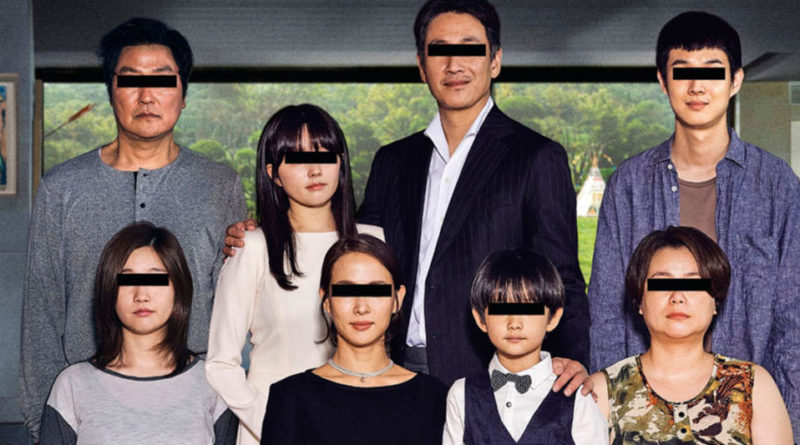
FILM REVIEW: PARASITE


Bong Joon-ho’s Parasite (2019) is like the wild and crazy evil twin of Hirokazu Koreeda’s Shoplifters. While both films deal with a family in poverty who resort to extreme measures to survive, their cinematic methods are polar opposites. While Shoplifters is a quiet and subtle film, Parasite is a rapidly paced and boisterous dark comedy/thriller. Koreeda makes more introspective arthouse family dramas, while Joon-ho is a practitioner of more audience friendly genre films; this is reflected in the drastically different approaches to the topic of class inequality in Parasite and Shoplifters.

Parasite is about a financially struggling family of con artists who infiltrate themselves into the lives of a wealthy family. Joon-ho’s regular leading man Song Kang-ho plays Kim Ki-taek, the father of the con artists, while Jang Hye-jin, Park So-dam, and Choi Woo-shik play the mother, daughter, and son, respectively. Lee Sun-kyun and Cho Yeo-jeong play Park Dong-ik and Choi Yeon-gyo respectively, the easily manipulated father and mother of the wealthy family. Parasite is best enjoyed with less revealed about the plot details, but it is essentially about a power struggle between the con artist Ki-taek family and the prosperous Dong-ik family.


In a way, Parasite is like Luis Bunuel’s parodies of class warfare as directed by Quentin Tarantino, as it mixes social commentary with homages to popular genre tropes and scenes of almost cartoonish violence. This is both a strength of the film and a drawback, as Joon-ho’s attempts at creating a deeper social examination of class inequality are not as well executed as his action/suspense set pieces. As expertly crafted as the thriller and suspense aspects of Parasite are, where it falls short on are its attempts at social criticism and character development.

The characters in Parasite, from the destitute yet noble Kim Ki-tek to the wealthy but elitist Park Dong-ik and Choi Yeon-gyo, never reach anything beyond one dimensional caricatures. Also, the social critique and analysis of class warfare never penetrates deeper than surface level generalities of the wealthy taking advantage of those less fortunate than them. Parasite aspires to be both a mass entertainment thriller, while at the same time being an examination of societal divisions, but it doesn’t offer a more nuanced portrayal of this issue as Koreeda’s Shoplifters did.


Joon-ho wants us to feel justified outrage for the crass materialism and insensitivity of the wealthy class, but he does so in an overly obvious and heavy-handed manner. We see scenes of the Dong-ik family wallowing in their material wealth and looking down upon those outside their class, but everything in Parasite is portrayed in a black and white good versus evil level, without any shades of grey or ambiguity. In addition, because Joon-ho didn’t take the time to develop his performances beyond caricatures, we don’t have enough emotional investment to care about the characters for the last act of the film to work effectively. Instead, the conclusion of Parasite, which takes a turn into soap-operish drama, feels long and drawn out and wallows in sentimentality.

With that being said, where Parasite excels at is Joon-ho’s masterful handling of action and suspense scenes. As revealed in his previous films, Joon-ho is an expert at creating tension in elaborately designed set pieces; he does so through ingenious staging of the actors and their movement relative to camera placement and angles. This is best illustrated in a nerve wracking scene where three members of the Ki-tek family hide from the Dong-ik family under a table. Through clever use of dialogue and incisive blocking, Joon-ho creates a master class in ratcheting up tension in a set piece that would have made Alfred Hitchcock proud.


Parasite is a nearly great film that is prevented from being a masterpiece through its wobbly character development and strained attempts at social criticism. Joon-ho is still relatively early in his career, with only eight films completed thus far, so he still has time to develop and hone his craft as a filmmaker. Spielberg, who Joon-ho resembles in many ways, also took some time to find the right balance between expertly crafted action/thriller sequences and deep, incisive social critique, so Joon-ho needs to continue to develop as a filmmaker. Once he does master his art, I am sure we will be seeing some groundbreaking and innovative films from Joon-ho.


Tuesday, November 26, 2019

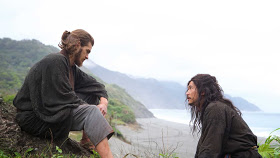
FILM REVIEW: SILENCE


Martin Scorsese struggled for decades to adapt Shusaku Endo's 1966 novel Silence into a film, and the result is a dark, brutal, and powerful masterpiece about a man's struggle with his faith, in the face of almost unbearable suffering and persecution. Although I am not a particularly religious person, what I connected with in Silence (2016) is its depiction of someone whose faith in a transcendent force guides his every thought and action. This force can be "Jesus," or "Buddha," or "Allah," but what Scorsese is trying to portray is a belief in a higher force that allows us to transcend the darker, more destructive side of human nature. 

Set in the 17th century, Silence is the story of a mission by Portuguese Jesuit priests Sebastiao Rodrigues (Andrew Garfield) and Francisco Garupe (Adam Driver) to find Father Cristovao Ferreira (Liam Neeson) in Japan, who has been rumored to have renounced his faith after being tortured.  Although they know that they are entering a country which at the time was targeting Christians with violent religious persecution, the two Jesuit priests nevertheless carry out their mission without hesitation.  In the process, the priests befriend a group of Japanese Christians, who practice their faith in secret under fear of being tortured and even killed.  Eventually, the two priests are captured by the Japanese, and Father Rodrigues' faith in a higher power is put to the ultimate test.

While the leads of Silence are the two Jesuit priests, Scorsese also gives equal time to the many Japanese actors in the film.  The standouts are Issey Ogata as the cruel and manipulative Inoue Masahige, Shinya Tsukamoto as the passionately devout Christian Mokichi, and Yosuke Kubozuka as the conniving and self-centered Kichijiro.  Shinya Tsukamoto gives a particularly powerful performance as a long-suffering Christian who is able to maintain his faith even under the cruelest forms of punishment.  Indeed, Silence is all about the struggle to maintain one's sanity and strength in the face of overwhelming brutality.  


Filmed in the verdant landscape of Taiwan, the natural scenery as shot by cinematographer Rodrigo Prieto is gorgeously rendered.  Scorsese contrasts the beauty of nature with the cruelty of the human world, and he doesn't flinch from showing us the bloody and brutal extents to which the Japanese inquisitors will go to torture and persecute the Jesuits priests and their fellow Japanese converts.  Silence continues Scorsese's examination of religious persecution, which he explored before in The Last Temptation of Christ and Kundun.  In this sense, Silence completes Scorsese's spiritual trilogy of films, with the connecting thread between the three films being a protagonist who struggles with keeping his faith in a world where the most atrocious and inhumane forms of destruction and violence exists.  

Although Silence is on its surface a religious film, its message of compassion for those who are suffering is a universal one.  Rodrigues is not only seeking to maintain his faith in a society that has outlawed it as a symbol of Western imperialism and control; he is ultimately seeking to transcend the cruelty and brutality of his time by not giving into his darker impulses to violently rebel against or physically attack those who are persecuting him.  Rodrigues is able to do this by never letting go of his faith in a higher power, which he views as a positive symbol of peace amidst a world filled with violence.  


Throughout the film, Rodrigues views his mission as one of bringing peace and love to those who are less fortunate than him; hence his willingness to take in the suffering Japanese villagers at the beginning of the film and allow them to practice their faith in peace.  If we take away the subject matter of Christianity and religion, we can also see Rodrigues as someone who views it as his life mission to be compassionate to all.

Indeed, throughout the film, Scorsese contrasts the more peaceful actions of Rodrigues with those of the inquisitors.  After one of the Japanese prisoners is horrifically beheaded for refusing to renounce his faith, Rodrigues gives forgiveness to another Japanese prisoner who is clearly a scoundrel and a liar.  Rodrigues sees the goodness in everyone as a guiding force in his life, while the inquisitors use violence and torture to maintain their worldview, much like the outlaw criminals in Scorsese's gangster films.


The use of physical forms of religious belief is displayed throughout Silence, in the form of Bressonian-like close-ups of hands in prayer, and various paintings and likenesses of Christ.  These physical manifestations of religious iconography are presented as forbidden symbols of spiritual expression in a wider society that forbids them.  Eventually, Rodrigues is forced to renounce his Christianity by stepping directly onto a likeness of Christ in an act of apostasy.  Interestingly enough, Rodrigues' struggles to communicate with God seem to stop after he steps on this physical form of religion.  Scorsese is showing how Rodrigues is finally able to transcend the outer realm of belief and internalize it into a deeper, spiritual inner world.  

Ultimately, Silence is a film about a man who struggles to maintain his faith in a benevolent, higher power amidst a world filled with death and destruction.  Scorsese shows us this struggle in masterfully directed scenes of betrayal and spiritual turmoil, but throughout Silence is a deep, unyielding belief in the goodness of humankind.  Without giving anything away, the last image of Silence shows Rodrigues literally holding onto a symbol of compassion and love, long after he has struggled with being able to outwardly reveal his faith in God. Scorsese's Silence shows us how even in the darkest of times, we should never let go of our better selves.  


Saturday, November 9, 2019

FILM REVIEW: SHOPLIFTERS


Hirokazu Koreeda’s Shoplifters (2018) is a heartbreaking film about a loving yet dysfunctional family that has the emotional resonance and raw power of Italian neorealist classics like Bicycle Thieves and Bitter Rice. Like those films, Shoplifters takes an unflinching look at the lengths those living in poverty will go to survive. There is no easy resolution to the characters’ situations in Shoplifters, and Koreeda doesn’t shy away from showing how morally ambiguous at times his leads can be. By asking the audience to identify with characters whose actions can be criminal at times, Koreeda is forcing us to reckon with our value systems when it comes to our perceptions of what proper society should be like.

Shoplifters is the story of Osamu (Masaya Nakagawa) and his wife Nobuyo (Sakura Ando), the heads of a non-traditional family of outcasts from society. Osamu trains a young boy named Shota (Kairi Jo) to shoplift, which becomes their main source of sustenance. This surrogate family lives in a small shack that is owned by an elderly woman by the name of Hatsue (Karin Kiki), who survives off of her deceased husband’s pension. Also living with this family is Aki (Mayu Matsuoka), a young woman who works at a hostess club. After Osamu takes in a young girl one night to join the family, the existing fissures in this makeshift family begin to crack, culminating in a series of tragic occurrences.


By creating this eclectic family unit, Koreeda is asking us to consider what does a family mean? Although the family in Shoplifters is not wealthy and must struggle to get by, they are depicted in the first half of the film as being close-knit and happy with each other. Koreeda carefully weaves together intimate and touching scenes of this misfit family genuinely enjoying each other’s company, and expressing true love for one another.

Then, in the second half of the film, Koreeda pulls the rug out from under us, and forces us to question our perceptions about this family. Without giving anything away, the true nature of the family’s living arrangement is revealed, and the former veneer of domestic bliss is stripped away to reveal a more cynical and troubling reality. However, Koreeda carefully reveals how despite the questionable motivations for the formation of the family, what makes them a real family is the genuine love and strong bond they feel for each other.


Koreeda contrasts this family with the more cold and distant family of the girl they take in. Although the girl’s biological family is more prosperous,  there are hints that they are guilty of neglect and abuse towards her. Indeed, the innocence of the girl and the other child character in Shoplifters, Shota, form the moral compass of the film.

Although Shota is taught to shoplift by his surrogate father, he ultimately realizes the errors of his ways, and is the one who later forces the family to reconsider the legality of their lives. Like in his previous films, Koreeda uses youth as a metaphor for the optimism of the future, and as a counter example for the corruption of some members of older generations. Adults in Koreeda’s film are oftentimes depicted as being not aware of the needs and desires of their children, who are left to fend for themselves.


Just as bucolic and peaceful as the first half of Shoplifters is, the last act of the film is an emotionally devastating portrait of the surrogate family being torn apart. The emotional highlight of the film is an almost unbearably painful monologue by Nobuyo, as she tries to justify her actions and at the same time come to terms with her fate.

For Koreeda, the sins of the parents give way to an uncertain and yet hopeful future for the next generation. The makeshift family unit in Shoplifters was one filled with love and affection, and yet also shunned by the wider society which they had no chance of fitting into. Ultimately, Shoplifters is a plea for more compassion and understanding for those who exist on the margins of society.


Sunday, November 3, 2019

FILM REVIEW: THE IRISHMAN


Martin Scorsese’s The Irishman (2019) is a stunning and monumental achievement. It’s a late career masterpiece that caps off a sort of gangster trilogy that began with Goodfellas and Casino. While Goodfellas was about the youth and joy of the gangster lifestyle (albeit a joy tinged with the bitter reality of violence) and Casino was about the success of middle aged gangsters, The Irishman is about a gangster at the later stages of his life, reflecting on the destructive consequences of the death and wreckage he has left behind. Although the first hour and a half of The Irishman has the ironic joie de vivre of the gangster as outlaw on display in Goodfellas and Casino, the second half of The Irishman is a much more mournful portrait of an aging gangster trying to atone for his sins.

Scorsese’s The Irishman is based on Charles Brandt’s book “I Heard You Paint Houses,” which is the biography of the gangster Frank Sheeran.  Both the book and the film portray how Sheeran, played by Robert De Niro, ascends the ladder of organized crime to eventually work for the powerful labor union leader Jimmy Hoffa (played by Al Pacino) who has extensive dealings with the criminal underworld. Sheeran gets his start through a chance encounter with the powerful Italian gangster Russell Bufalino (played by Joe Pesci), who takes him under his wing and helps Sheeran along in his ascension up the ranks of the mafia.

What separates The Irishman from Scorsese’s earlier gangster films is its much broader social and political scope, as Sheeran’s dealings with organized crime bring him into contact with such powerful historical figures and events as the election and assassination of John F. Kennedy, the heated union disputes between Jimmy Hoffa and his rivals, and the attempted American coup of Fidel Castro’s Cuba during the Bay of Pigs invasion. This expanded range of context gives The Irishman a richer and more complex backdrop for Scorsese to explore how deeply intertwined the world of organized crime has been with all aspects of American life.


This deeper backdrop gives The Irishman an epic feel that allows the viewer to luxuriate in the almost novelistic texture of the narrative, which feels like classical literature at times. We as the viewer are as fully engulfed in the three and a half hour runtime of Scorsese’s elaborately designed cinematic canvas as we would be reading a 1000 plus page Leo Tolstoy historical novel.  The Irishman explores how history, on both a societal and personal level, can have tragic consequences on an individual’s life.

Indeed, the final hour of The Irishman feels almost like an Ingmar Bergman film, as Sheeran struggles to come to terms with his fading mortality, while at the same time reflecting on the many deaths he has brought on through his own actions. De Niro’s powerful performance, which is achieved largely through non-verbal physical cues, brings to weight the full tragedy of Sheeran’s life, culminating in a darkly funny scene where he goes shopping for his own coffin. 

The specter of death haunts almost every frame of The Irishman, from its opening scenes in a retirement home filled with aging and sick elders, to its many literal deaths brought on by the violent actions of its gangster characters. Scorsese is laying bare for us in a much more cold and brutal way than he did in Goodfellas and Casino the full destructive nature of the gangster lifestyle. Also, unlike in his earlier gangster films, Scorsese is not interested in fetishizing or glamorizing violence in The Irishman. In one memorable scene, two gangsters enter a barbershop as the camera pans along with them. Instead of showing the gangsters massacring their targets in the barbershop, Scorsese keeps the camera outside the store focused on a bouquet of flowers, as we hear screams and gunshots inside. With The Irishman, Scorsese is not interested in showing us violence; instead, he wants to show the destructive consequences of violence.


In Goodfellas and Casino, scenes of brutal violence were oftentimes counteracted by scenes of gangsters enjoying the fruits of their labor as if they were essentially a happy family unit of sorts. However, in The Irishman, there is no real family unit for Sheeran to fall back on or rely on for warmth and comfort.  

Instead, the substitute “family” unit of the gangsters in The Irishman are all portrayed as backstabbing and manipulative individuals who view Sheeran as only an instrument for them to use for their own means. Also, Sheeran’s actual biological family are equally cold and distant towards him; something which is justified due to the many murders he was responsible for. Sheeran realizes this near the end of his life, so the last part of the film deals with Sheeran’s attempts to reconcile with his biological family over his violent past.

It’s almost as if Scorsese, like Sheeran’s character, is atoning for what he perceives as his past “sins.” Scorsese has oftentimes, wrongly in my opinion, been accused of glorifying the gangster lifestyle through his films. While Goodfellas and Casino did sometimes portray gangsters as having at times glamorous lives, the films also ended by showing how ultimately empty these lives were.  The Irishman, with its more meditative and measured tone about gangsters, is Scorsese’s attempt to come to terms with his career, and reflecting on the results of his past work.  


Ultimately, what makes The Irishman such a powerful and important film is its message of redemption. Scorsese is asking us if we can forgive someone who has led a life of death and destruction, and if not, then what ultimately is it that makes us human?  Do even the most violent and seemingly immoral people have even a shred of humanity left in them? Perhaps, Scorsese is saying, we can strive to seek peace and redemption even among those who seem irredeemable. 

In the last act of The Irishman, Sheeran tries to make amends with his estranged daughters. The very fact that Sheeran is even trying to reunite with his family near the end of his life means that he himself sees the error of his ways, so he still has some humanity left. With The Irishman, Scorsese is telling us— if someone as seemingly unforgivable as Sheeran can find redemption and seek a more peaceful life, then so can we all.

Or, as Scorsese himself has said, “It seems to me that any sensible person must see that violence does not change the world and if it does, then only temporarily. And as I’ve gotten older, I’ve had more of a tendency to look for people who live by kindness, tolerance, compassion, a gentler way of looking at things.”


Sunday, October 20, 2019

ANG LEE AND THE FUTURE OF CINEMA


Throughout his career, Ang Lee has made intimate films which dealt with family dysfunction. His earlier films Pushing Hands, Eat Drink Man Woman, and The Wedding Banquet examined inter-generational conflict between parents and their offspring, while his American films such as The Ice Storm and Brokeback Mountain explored how the nuclear family was threatened and disrupted by outside forces. What connected all these films together was Lee’s concern for exploring how the central family unit could survive in a rapidly changing society. Critics praised Lee for his work, and heralded him as a contemporary master of small-scale dramas.


Then, Lee surprised many with his embrace of large budget, effects heavy films that at first glance were completely different from his smaller, more intimate films. With Life of Pi, Lee used 3D and CGI technology to create an epic adventure film that veered into fantasy territory. Life of Pi received both commercial success and critical acclaim, and was celebrated as a visually extravagant adventure story. However, upon closer inspection, Life of Pi was also ultimately a film about the family unit; the central premise of the film was about how a close-knit family was torn apart by a tragic event which forever changed the life of the son.

With his subsequent films after Life of Pi, Lee further explored technological advances in cinema by experimenting with high frame rates. Lee filmed Billy Lynn’s Long Halftime Walk using 60 frames per second, resulting in a hyper realistic visual aesthetic. Then, with Gemini Man, Lee went even further and filmed in 120 frames per second. Although on the surface Billy Lynn’s Long Halftime Walk and Gemini Man seem to have nothing in common with Lee’s smaller films, they are further continuations of Lee’s exploration of the family.


In Billy Lynn’s Long Halftime Walk, Lee explores how the central character struggles to choose between his biological family and the new “family” he found in his Bravo Squad army unit, led by the surrogate father figures of Sergeant Breem and Sergeant Dime.  In Gemini Man, Will Smith’s character is a government assassin who never had a family of his own. He then discovers a surrogate family in the form of another agent by the name of Dani, who becomes his unofficial “wife,” and with the discovery of his younger cloned self, who becomes his “son.” It’s interesting to note how in both films, the main characters find their true families outside of their biological families.

Also, the central conflict in both films involves the protagonists trying to keep the bonds with their newfound family intact against outer forces which threaten to tear apart their surrogate family units.  Billy Lynn’s Long Halftime Walk is about how the media and American society keeps misinterpreting and wanting to take advantage of the “family unit” of the soldiers for their own purposes. Gemini Man is about Will Smith trying to prevent the government from separating him from his surrogate son in the form of his cloned self.

With the thematic consistency between Billy Lynn’s Long Halftime Walk and Gemini Man with Lee’s earlier critically acclaimed films, the question remains as to why these more recent films were so negatively received?  Much of the hostility towards these films can be explained by the technology that Lee used in these two films. High frame rate shooting is traditionally reserved for sporting events or live events such as concerts and awards ceremonies. The reason for this is because high frame rate visuals are very crisp and clear, and thus they make viewers feel more like they are a part of the event.


By applying this same “live” feel to the medium of narrative cinema, Lee is also attempting to make the viewer feel like they are actually experiencing what they are seeing on screen in real time. He wants to separate the usual distance which traditional 24 frames per second film creates for viewers, and instead make us feel like we are fully engulfed in the cinematic experience. Indeed, Billy Lynn’s Long Halftime Walk is set during an actual sporting event, and the Iraq war scenes feel like CNN live embeds. Lee is immersing us directly into the action of the film.

Traditionally, viewers of cinema want to feel like they are seeing a fictional recreation of real life; this is what 24 frames per second films accomplish by establishing a clear separation between the viewer and what they are seeing on screen. 24 frames per second creates a sheen of film movement and texture which is not like real life. Instead, it gives cinema the texture and feel of a separate, fictional realm of storytelling.

We have been cognitively trained through decades of film viewing to approach and see cinema in this manner. As a result, when we are forced out of our comfort zone and made to feel like we are no longer separated from the illusion of cinema, our natural reaction is discomfort and hostility. Hence, this explains the overwhelmingly negative reception for Billy Lynn’s Long Halftime Walk and Gemini Man.

On their own merits, both Billy Lynn’s Long Halftime Walk and Gemini Man are emotionally powerful and skillfully made explorations about the family unit.  It may take a long time for cinema viewers to embrace 120 frames per second filming, or perhaps they will never fully embrace it. However, all art forms evolve and I believe that a more hyper real form of cinema is the next major evolution in cinema. Silent films evolved into sound films, black and white films evolved into color films, and now we are in the digital evolution of filmmaking.

High frame rate was designed specifically for digital filmmaking, and Ang Lee is exploring how we as viewers and filmmakers can continue to see and make cinema which advances the evolution of digital technology.  Almost all aspects of our lives are becoming increasingly reliant on an online world that is based on a virtual, digital form of reality.  The next evolution in film is a plunge into this digital world through high frame rate technology; Ang Lee is just giving us the extra push to immerse ourselves in this brave new world.


Monday, October 29, 2018

WHAT IS CINEMA IN A DIGITAL STREAMING AGE?

As the recent rise and fall of the independent streaming service FilmStruck demonstrated, the nature of film viewing is in a constant state of evolution.  FilmStruck started out as a collaboration between TCM (Turner Classic Movies, owned by Time Warner) and The Criterion Collection, with a mission statement of providing an art-house streaming alternative to tech giants Netflix, Amazon, and Hulu.  The traditional streaming services primarily focus on original programming and modern blockbuster films, while mostly leaving out older films from before the 1990s and more obscure foreign films.  FilmStruck filled this void by providing instant access to older classic films and a wide assortment of foreign films from countries as far flung as Senegal and Macedonia.


However, as soon as FilmStruck owner Time Warner merged with the telecommunications giant AT&T, profit became the main driving force for Time Warner, and naturally they axed FilmStruck. In their own words, AT&T stated that FilmStruck was too much of a "niche" market; in other words, it wasn't earning enough of a profit.  Now, the question still remains-- why wasn't FilmStruck more profitable?


Much of this has to do with the nature of film viewing itself.  Most people who consider themselves to be true adherents of cinema still prefer the actual theatrical experience of viewing film rather than through streaming services or even through the physical mediums of DVDs and blu-rays.  FilmStruck was created to appeal to this dedicated demographic of film lovers, so due to its nature as a streaming service, it was doomed from the start.


There is still a large digital database of classic and foreign films, as demonstrated by FilmStruck, but the question now is who owns this catalog?  This is the central question for film lovers, and the rallying cry now for why physical media is still preferable to streaming.  By having a film on a DVD or blu-ray, we own the film on a permanent basis, without having to worry about whether or not it will one day disappear online due to profitability issues.  Yes, the shelves of film lovers like myself are overflowing with DVDs and blu-rays of films, and we have to constantly find creative ways to make more space in our homes to accommodate our ever expanding collections of films.  But, this is the sacrifice we are willing to make in order to have permanent access to the films we love.


From its beginnings in small, smoke-filled theaters with musical accompaniment, through the advent of sound and color, and onto the digital age, film has changed drastically as a medium itself and how we as spectators view it.  Theatrical viewing has dwindled, with the majority of people preferring to watch films in their own living rooms with the latest streaming technology.  The physical medium of film viewing via DVDs and blu-rays, and now the latest 4K UHD format, is still popular among passionate film lovers, but it is becoming obsolete among the general viewing public. 

If the physical format does not survive and/or is drastically reduced, we have to realize that streaming services such as FilmStruck are a viable alternative for viewing films.  Although it took several months for it to work out its kinks, by the time it was fully functioning, FilmStruck was a marvel to behold.  It functioned very much like an online streaming film school, with the films being organized into different categories such as country of origin, historical period, or director.  FilmStruck also had its own original programming, with interviews with prominent directors such as Barry Jenkins, Philip Kaufman, and Damien Chazelle, as well as short introductions to the films by celebrated film commentators like Alicia Malone.  While it existed, FilmStruck filled an essential gap in the online streaming world.


The question of ownership is not easily resolved, as having a physical copy of a film in a lavish edition such as those created by Arrow and Criterion is not the same as having a digital online copy of a film.  However, having streaming access to a film and owning a physical copy should not be mutually exclusive.  The streaming copy of the film can be used whenever we want to easily access a film we love without having to search for that film in our cavernous DVD/blu-ray collections.  If we want to view the film more in-depth, then we have the alternative of the physical copy too. 


Beyond this, it is important to have an online streaming database of classic and foreign films not offered by the traditional tech giants.  Each successive generation changes its viewing habits, so we as film lovers have to adjust our expectations for film viewing accordingly, or we risk having the entire history of film disappearing and being replaced by Netflix original programming.  For this reason, it is essential that a streaming service such as FilmStruck remains functioning to preserve the history of film for future generations.


Friday, December 7, 2012

THE BEST FILMMAKERS OF ALL TIME

Is there truly an objective way to determine who the best filmmakers of all time are?  There’s always some subjectivity and personal opinion which are bound to come into play when making these kinds of decisions.  However, I do believe that if we set some guidelines to adhere by, it is possible to make a mostly objective list of the greatest filmmakers of all time.

So, the question arises—what are these guidelines?  For me, the most important criteria to adhere to is whether or not the filmmaker contributed in any way to innovating or advancing the medium of film.  Just as the most innovative scientists were able to come up with theories that contributed to the evolution of technology, we must similarly determine if there were certain filmmakers who were able to elevate cinema to a higher level. 

An equally important criteria is whether or not the filmmaker has influenced other filmmakers.  All art forms are influenced by earlier works of art, and there is a reason why this happens.  It’s because the original art work had a lasting and important impact on the field in question.  When an important innovation occurs, it is oftentimes misunderstood and questioned by many, and thus it may sometimes takes years, and even decades, before the innovation is even acknowledged by the wider society. 

There are many examples of films that were dismissed upon their initial release, only to be regarded as significant works of art in later years.  This is because these films were ahead of their time, and it oftentimes takes society some time to catch up to them. 

So, with these guidelines in place, here is my list of the ten greatest filmmakers of all time, along with their most important films:

1.     Stanley Kubrick (Paths of Glory, Dr. Strangelove, 2001)
2.     Jean Luc Godard (Breathless, Masculin Féminin, Histoire(s) du cinéma)
3.     Akira Kurosawa (Rashomon, The Seven Samurai, Ran)
4.     Alfred Hitchcock (Psycho, Vertigo, Rear Window)
5.     Sergei Eisenstein (Strike, Alexander Nevsky, Battleship Potemkin)
6.     Ingmar Bergman (The Virgin Spring, Scenes from a Marriage, The Seventh Seal)
7.     Edward Yang (The Terrorizers, A Brighter Summer Day, Yi Yi)
8.     Fritz Lang (Die Nibelungen, Metropolis, M)
9.     Orson Welles (The Magnificent Ambersons, Citizen Kane, Mr. Arkadin)
10.  Federico Fellini (Nights of Cabiria, 8 ½, La Dolce Vita)

Honorable Mentions:  John Ford, Bela Tarr, D.W. Griffith, Martin Scorsese