Showing posts with label Japan. Show all posts

Tuesday, November 26, 2019

FILM REVIEW: SILENCE


Martin Scorsese struggled for decades to adapt Shusaku Endo's 1966 novel Silence into a film, and the result is a dark, brutal, and powerful masterpiece about a man's struggle with his faith, in the face of almost unbearable suffering and persecution. Although I am not a particularly religious person, what I connected with in Silence (2016) is its depiction of someone whose faith in a transcendent force guides his every thought and action. This force can be "Jesus," or "Buddha," or "Allah," but what Scorsese is trying to portray is a belief in a higher force that allows us to transcend the darker, more destructive side of human nature. 

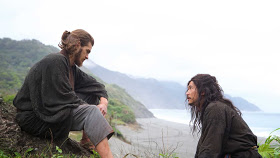
Set in the 17th century, Silence is the story of a mission by Portuguese Jesuit priests Sebastiao Rodrigues (Andrew Garfield) and Francisco Garupe (Adam Driver) to find Father Cristovao Ferreira (Liam Neeson) in Japan, who has been rumored to have renounced his faith after being tortured.  Although they know that they are entering a country which at the time was targeting Christians with violent religious persecution, the two Jesuit priests nevertheless carry out their mission without hesitation.  In the process, the priests befriend a group of Japanese Christians, who practice their faith in secret under fear of being tortured and even killed.  Eventually, the two priests are captured by the Japanese, and Father Rodrigues' faith in a higher power is put to the ultimate test.

While the leads of Silence are the two Jesuit priests, Scorsese also gives equal time to the many Japanese actors in the film.  The standouts are Issey Ogata as the cruel and manipulative Inoue Masahige, Shinya Tsukamoto as the passionately devout Christian Mokichi, and Yosuke Kubozuka as the conniving and self-centered Kichijiro.  Shinya Tsukamoto gives a particularly powerful performance as a long-suffering Christian who is able to maintain his faith even under the cruelest forms of punishment.  Indeed, Silence is all about the struggle to maintain one's sanity and strength in the face of overwhelming brutality.  


Filmed in the verdant landscape of Taiwan, the natural scenery as shot by cinematographer Rodrigo Prieto is gorgeously rendered.  Scorsese contrasts the beauty of nature with the cruelty of the human world, and he doesn't flinch from showing us the bloody and brutal extents to which the Japanese inquisitors will go to torture and persecute the Jesuits priests and their fellow Japanese converts.  Silence continues Scorsese's examination of religious persecution, which he explored before in The Last Temptation of Christ and Kundun.  In this sense, Silence completes Scorsese's spiritual trilogy of films, with the connecting thread between the three films being a protagonist who struggles with keeping his faith in a world where the most atrocious and inhumane forms of destruction and violence exists.  

Although Silence is on its surface a religious film, its message of compassion for those who are suffering is a universal one.  Rodrigues is not only seeking to maintain his faith in a society that has outlawed it as a symbol of Western imperialism and control; he is ultimately seeking to transcend the cruelty and brutality of his time by not giving into his darker impulses to violently rebel against or physically attack those who are persecuting him.  Rodrigues is able to do this by never letting go of his faith in a higher power, which he views as a positive symbol of peace amidst a world filled with violence.  


Throughout the film, Rodrigues views his mission as one of bringing peace and love to those who are less fortunate than him; hence his willingness to take in the suffering Japanese villagers at the beginning of the film and allow them to practice their faith in peace.  If we take away the subject matter of Christianity and religion, we can also see Rodrigues as someone who views it as his life mission to be compassionate to all.

Indeed, throughout the film, Scorsese contrasts the more peaceful actions of Rodrigues with those of the inquisitors.  After one of the Japanese prisoners is horrifically beheaded for refusing to renounce his faith, Rodrigues gives forgiveness to another Japanese prisoner who is clearly a scoundrel and a liar.  Rodrigues sees the goodness in everyone as a guiding force in his life, while the inquisitors use violence and torture to maintain their worldview, much like the outlaw criminals in Scorsese's gangster films.


The use of physical forms of religious belief is displayed throughout Silence, in the form of Bressonian-like close-ups of hands in prayer, and various paintings and likenesses of Christ.  These physical manifestations of religious iconography are presented as forbidden symbols of spiritual expression in a wider society that forbids them.  Eventually, Rodrigues is forced to renounce his Christianity by stepping directly onto a likeness of Christ in an act of apostasy.  Interestingly enough, Rodrigues' struggles to communicate with God seem to stop after he steps on this physical form of religion.  Scorsese is showing how Rodrigues is finally able to transcend the outer realm of belief and internalize it into a deeper, spiritual inner world.  

Ultimately, Silence is a film about a man who struggles to maintain his faith in a benevolent, higher power amidst a world filled with death and destruction.  Scorsese shows us this struggle in masterfully directed scenes of betrayal and spiritual turmoil, but throughout Silence is a deep, unyielding belief in the goodness of humankind.  Without giving anything away, the last image of Silence shows Rodrigues literally holding onto a symbol of compassion and love, long after he has struggled with being able to outwardly reveal his faith in God. Scorsese's Silence shows us how even in the darkest of times, we should never let go of our better selves.  


Saturday, November 9, 2019

FILM REVIEW: SHOPLIFTERS


Hirokazu Koreeda’s Shoplifters (2018) is a heartbreaking film about a loving yet dysfunctional family that has the emotional resonance and raw power of Italian neorealist classics like Bicycle Thieves and Bitter Rice. Like those films, Shoplifters takes an unflinching look at the lengths those living in poverty will go to survive. There is no easy resolution to the characters’ situations in Shoplifters, and Koreeda doesn’t shy away from showing how morally ambiguous at times his leads can be. By asking the audience to identify with characters whose actions can be criminal at times, Koreeda is forcing us to reckon with our value systems when it comes to our perceptions of what proper society should be like.

Shoplifters is the story of Osamu (Masaya Nakagawa) and his wife Nobuyo (Sakura Ando), the heads of a non-traditional family of outcasts from society. Osamu trains a young boy named Shota (Kairi Jo) to shoplift, which becomes their main source of sustenance. This surrogate family lives in a small shack that is owned by an elderly woman by the name of Hatsue (Karin Kiki), who survives off of her deceased husband’s pension. Also living with this family is Aki (Mayu Matsuoka), a young woman who works at a hostess club. After Osamu takes in a young girl one night to join the family, the existing fissures in this makeshift family begin to crack, culminating in a series of tragic occurrences.


By creating this eclectic family unit, Koreeda is asking us to consider what does a family mean? Although the family in Shoplifters is not wealthy and must struggle to get by, they are depicted in the first half of the film as being close-knit and happy with each other. Koreeda carefully weaves together intimate and touching scenes of this misfit family genuinely enjoying each other’s company, and expressing true love for one another.

Then, in the second half of the film, Koreeda pulls the rug out from under us, and forces us to question our perceptions about this family. Without giving anything away, the true nature of the family’s living arrangement is revealed, and the former veneer of domestic bliss is stripped away to reveal a more cynical and troubling reality. However, Koreeda carefully reveals how despite the questionable motivations for the formation of the family, what makes them a real family is the genuine love and strong bond they feel for each other.


Koreeda contrasts this family with the more cold and distant family of the girl they take in. Although the girl’s biological family is more prosperous,  there are hints that they are guilty of neglect and abuse towards her. Indeed, the innocence of the girl and the other child character in Shoplifters, Shota, form the moral compass of the film.

Although Shota is taught to shoplift by his surrogate father, he ultimately realizes the errors of his ways, and is the one who later forces the family to reconsider the legality of their lives. Like in his previous films, Koreeda uses youth as a metaphor for the optimism of the future, and as a counter example for the corruption of some members of older generations. Adults in Koreeda’s film are oftentimes depicted as being not aware of the needs and desires of their children, who are left to fend for themselves.


Just as bucolic and peaceful as the first half of Shoplifters is, the last act of the film is an emotionally devastating portrait of the surrogate family being torn apart. The emotional highlight of the film is an almost unbearably painful monologue by Nobuyo, as she tries to justify her actions and at the same time come to terms with her fate.

For Koreeda, the sins of the parents give way to an uncertain and yet hopeful future for the next generation. The makeshift family unit in Shoplifters was one filled with love and affection, and yet also shunned by the wider society which they had no chance of fitting into. Ultimately, Shoplifters is a plea for more compassion and understanding for those who exist on the margins of society.


Monday, September 17, 2012

FILM REVIEW: THE SHOCK LABYRINTH

There are interesting differences between Asian horror films in terms of their countries of origin.  Korean horror films tend to be more realistic and straightforward in tone, and focus more on real life thrills, such as serial killer/detective plots (I Saw the Devil, Tell Me Something).  This can be attributed to Korean films being more mainstream in tone, as the Korean film industry is trying to establish a new Hollywood of sorts in the East, and want to make films that can compete with Hollywood on the global film market.


ISawTheDevil


Southeast Asian horror films tend to focus on the supernatural realm, with films dealing with ghosts and hauntings (Shutter, Ghost of Mae Nak).  This focus on the more supernatural realm of horror films can be attributed to the highly spiritual nature of Southeast Asian society; in many parts of Southeast Asia, such as Thailand and Indonesia, the realm of ghosts and spirits is intricately linked with the mundane realm of the real world. 


Shutter

 
Japanese horror films, on the other hand, are the most eccentric and original of all Asian horror films, as they frequently delve into the realm of the surreal and the absurd.  This may be attributed to the very strict and disciplined nature of Japanese society, in which life is based on a series of orderly and long-engrained traditions of rules and rituals.  Thus, the arts are a means of escaping from the rigid confines of Japanese society, and into a liberating realm of free-flowing creativity and taboo breaking, sometimes shocking displays of defiance.

The 2009 Japanese horror film The Shock Labyrinth is a perfect example of this rebellious, surreal aspect of Japanese arts.  Directed by the prolific and successful Takashi Shimizu, best known for the Ju-on series of horror films, The Shock Labyrinth is a bold and chilling film.  The Shock Labyrinth is reminiscent of the cult classic Japanese film Hausu, which was re-released by The Criterion Collection in 2010.  Like Hausu, The Shock Labyrinth is a genre bending film that takes the horror film trope about a group of youth who find themselves in a haunted house, and elevates it to a surreal and outrageous level. 

TheShockLabyrinth

The Shock Labyrinth begins with a group of young friends who mysteriously encounter Yuki, a long lost friend who they thought had been dead for a long time.  As the friends begin to question the true identity of Yuki, and some start to question their own sanity, Yuki has an accident, and they are forced to drive her to a hospital.  The only hospital they find turns out to be deserted, and as they explore the hospital, dark, hidden secrets from the friends’ childhood start to emerge.


TheShockLabyrinth3 

Like the Overlook Hotel in Stanley Kubrick’s The Shining, the hospital in The Shock Labyrinth starts to take on an identity by itself, as it taps into the subconscious of each of the friends to dig up repressed memories of a tragic event that occurred in their collective childhood experience.  As the title implies, the narrative of The Shock Labyrinth becomes labyrinthian in nature, as it weaves back and forth between violent and haunting memories of each of the main characters.  The dark and frightening rooms and tunnels in the hospital become direct reflections of the primal fears of each character, and as the true identity of Yuki gradually reveals itself, the characters one by one descend into madness.

Shimizu does a great job of throwing the audience into emotional turmoil, as his narrative gradually fragments into seemingly disconnected scenes of disturbing violence and bloodshed.  Upon repeated viewings, the fragmentary scenes of the narrative gradually reveal themselves to be intricately connected, like a giant puzzle which can only be solved by the more patient and discerning players.  What Shimizu is doing is cinematically portraying the true nature of a nightmare—how the seemingly random nature of our dreaming world has its own internal logic, one based upon the deeper matrix of the collective subconscious.

By gradually revealing more and more about the mystery of Yuki, Shimizu is also revealing the true nature of repressed memories.  Oftentimes when a traumatic event occurs, our mind tends to repress memories of this event.  These memories only come out when we are presented with a triggering mechanism to conjure them up.  The triggering mechanism in The Shock Labyrinth is the hospital itself, which becomes a living, breathing monster that threatens to swallow up all of the main characters. 

The Shock Labyrinth is a brilliant and frightening film that takes us on a wild ride into the realm of nightmares.  Its narrative structure is psychologically sophisticated, and by the end of the film, the viewer is stuck in the deepest, darkest realms of the character’s horrific memories.


TheShockLabyrinth1