Showing posts with label Taiwan. Show all posts

Tuesday, November 26, 2019

FILM REVIEW: SILENCE


Martin Scorsese struggled for decades to adapt Shusaku Endo's 1966 novel Silence into a film, and the result is a dark, brutal, and powerful masterpiece about a man's struggle with his faith, in the face of almost unbearable suffering and persecution. Although I am not a particularly religious person, what I connected with in Silence (2016) is its depiction of someone whose faith in a transcendent force guides his every thought and action. This force can be "Jesus," or "Buddha," or "Allah," but what Scorsese is trying to portray is a belief in a higher force that allows us to transcend the darker, more destructive side of human nature. 

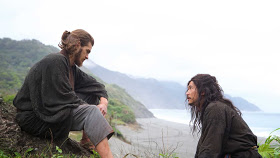
Set in the 17th century, Silence is the story of a mission by Portuguese Jesuit priests Sebastiao Rodrigues (Andrew Garfield) and Francisco Garupe (Adam Driver) to find Father Cristovao Ferreira (Liam Neeson) in Japan, who has been rumored to have renounced his faith after being tortured.  Although they know that they are entering a country which at the time was targeting Christians with violent religious persecution, the two Jesuit priests nevertheless carry out their mission without hesitation.  In the process, the priests befriend a group of Japanese Christians, who practice their faith in secret under fear of being tortured and even killed.  Eventually, the two priests are captured by the Japanese, and Father Rodrigues' faith in a higher power is put to the ultimate test.

While the leads of Silence are the two Jesuit priests, Scorsese also gives equal time to the many Japanese actors in the film.  The standouts are Issey Ogata as the cruel and manipulative Inoue Masahige, Shinya Tsukamoto as the passionately devout Christian Mokichi, and Yosuke Kubozuka as the conniving and self-centered Kichijiro.  Shinya Tsukamoto gives a particularly powerful performance as a long-suffering Christian who is able to maintain his faith even under the cruelest forms of punishment.  Indeed, Silence is all about the struggle to maintain one's sanity and strength in the face of overwhelming brutality.  


Filmed in the verdant landscape of Taiwan, the natural scenery as shot by cinematographer Rodrigo Prieto is gorgeously rendered.  Scorsese contrasts the beauty of nature with the cruelty of the human world, and he doesn't flinch from showing us the bloody and brutal extents to which the Japanese inquisitors will go to torture and persecute the Jesuits priests and their fellow Japanese converts.  Silence continues Scorsese's examination of religious persecution, which he explored before in The Last Temptation of Christ and Kundun.  In this sense, Silence completes Scorsese's spiritual trilogy of films, with the connecting thread between the three films being a protagonist who struggles with keeping his faith in a world where the most atrocious and inhumane forms of destruction and violence exists.  

Although Silence is on its surface a religious film, its message of compassion for those who are suffering is a universal one.  Rodrigues is not only seeking to maintain his faith in a society that has outlawed it as a symbol of Western imperialism and control; he is ultimately seeking to transcend the cruelty and brutality of his time by not giving into his darker impulses to violently rebel against or physically attack those who are persecuting him.  Rodrigues is able to do this by never letting go of his faith in a higher power, which he views as a positive symbol of peace amidst a world filled with violence.  


Throughout the film, Rodrigues views his mission as one of bringing peace and love to those who are less fortunate than him; hence his willingness to take in the suffering Japanese villagers at the beginning of the film and allow them to practice their faith in peace.  If we take away the subject matter of Christianity and religion, we can also see Rodrigues as someone who views it as his life mission to be compassionate to all.

Indeed, throughout the film, Scorsese contrasts the more peaceful actions of Rodrigues with those of the inquisitors.  After one of the Japanese prisoners is horrifically beheaded for refusing to renounce his faith, Rodrigues gives forgiveness to another Japanese prisoner who is clearly a scoundrel and a liar.  Rodrigues sees the goodness in everyone as a guiding force in his life, while the inquisitors use violence and torture to maintain their worldview, much like the outlaw criminals in Scorsese's gangster films.


The use of physical forms of religious belief is displayed throughout Silence, in the form of Bressonian-like close-ups of hands in prayer, and various paintings and likenesses of Christ.  These physical manifestations of religious iconography are presented as forbidden symbols of spiritual expression in a wider society that forbids them.  Eventually, Rodrigues is forced to renounce his Christianity by stepping directly onto a likeness of Christ in an act of apostasy.  Interestingly enough, Rodrigues' struggles to communicate with God seem to stop after he steps on this physical form of religion.  Scorsese is showing how Rodrigues is finally able to transcend the outer realm of belief and internalize it into a deeper, spiritual inner world.  

Ultimately, Silence is a film about a man who struggles to maintain his faith in a benevolent, higher power amidst a world filled with death and destruction.  Scorsese shows us this struggle in masterfully directed scenes of betrayal and spiritual turmoil, but throughout Silence is a deep, unyielding belief in the goodness of humankind.  Without giving anything away, the last image of Silence shows Rodrigues literally holding onto a symbol of compassion and love, long after he has struggled with being able to outwardly reveal his faith in God. Scorsese's Silence shows us how even in the darkest of times, we should never let go of our better selves.  


Sunday, October 20, 2019

ANG LEE AND THE FUTURE OF CINEMA


Throughout his career, Ang Lee has made intimate films which dealt with family dysfunction. His earlier films Pushing Hands, Eat Drink Man Woman, and The Wedding Banquet examined inter-generational conflict between parents and their offspring, while his American films such as The Ice Storm and Brokeback Mountain explored how the nuclear family was threatened and disrupted by outside forces. What connected all these films together was Lee’s concern for exploring how the central family unit could survive in a rapidly changing society. Critics praised Lee for his work, and heralded him as a contemporary master of small-scale dramas.


Then, Lee surprised many with his embrace of large budget, effects heavy films that at first glance were completely different from his smaller, more intimate films. With Life of Pi, Lee used 3D and CGI technology to create an epic adventure film that veered into fantasy territory. Life of Pi received both commercial success and critical acclaim, and was celebrated as a visually extravagant adventure story. However, upon closer inspection, Life of Pi was also ultimately a film about the family unit; the central premise of the film was about how a close-knit family was torn apart by a tragic event which forever changed the life of the son.

With his subsequent films after Life of Pi, Lee further explored technological advances in cinema by experimenting with high frame rates. Lee filmed Billy Lynn’s Long Halftime Walk using 60 frames per second, resulting in a hyper realistic visual aesthetic. Then, with Gemini Man, Lee went even further and filmed in 120 frames per second. Although on the surface Billy Lynn’s Long Halftime Walk and Gemini Man seem to have nothing in common with Lee’s smaller films, they are further continuations of Lee’s exploration of the family.


In Billy Lynn’s Long Halftime Walk, Lee explores how the central character struggles to choose between his biological family and the new “family” he found in his Bravo Squad army unit, led by the surrogate father figures of Sergeant Breem and Sergeant Dime.  In Gemini Man, Will Smith’s character is a government assassin who never had a family of his own. He then discovers a surrogate family in the form of another agent by the name of Dani, who becomes his unofficial “wife,” and with the discovery of his younger cloned self, who becomes his “son.” It’s interesting to note how in both films, the main characters find their true families outside of their biological families.

Also, the central conflict in both films involves the protagonists trying to keep the bonds with their newfound family intact against outer forces which threaten to tear apart their surrogate family units.  Billy Lynn’s Long Halftime Walk is about how the media and American society keeps misinterpreting and wanting to take advantage of the “family unit” of the soldiers for their own purposes. Gemini Man is about Will Smith trying to prevent the government from separating him from his surrogate son in the form of his cloned self.

With the thematic consistency between Billy Lynn’s Long Halftime Walk and Gemini Man with Lee’s earlier critically acclaimed films, the question remains as to why these more recent films were so negatively received?  Much of the hostility towards these films can be explained by the technology that Lee used in these two films. High frame rate shooting is traditionally reserved for sporting events or live events such as concerts and awards ceremonies. The reason for this is because high frame rate visuals are very crisp and clear, and thus they make viewers feel more like they are a part of the event.


By applying this same “live” feel to the medium of narrative cinema, Lee is also attempting to make the viewer feel like they are actually experiencing what they are seeing on screen in real time. He wants to separate the usual distance which traditional 24 frames per second film creates for viewers, and instead make us feel like we are fully engulfed in the cinematic experience. Indeed, Billy Lynn’s Long Halftime Walk is set during an actual sporting event, and the Iraq war scenes feel like CNN live embeds. Lee is immersing us directly into the action of the film.

Traditionally, viewers of cinema want to feel like they are seeing a fictional recreation of real life; this is what 24 frames per second films accomplish by establishing a clear separation between the viewer and what they are seeing on screen. 24 frames per second creates a sheen of film movement and texture which is not like real life. Instead, it gives cinema the texture and feel of a separate, fictional realm of storytelling.

We have been cognitively trained through decades of film viewing to approach and see cinema in this manner. As a result, when we are forced out of our comfort zone and made to feel like we are no longer separated from the illusion of cinema, our natural reaction is discomfort and hostility. Hence, this explains the overwhelmingly negative reception for Billy Lynn’s Long Halftime Walk and Gemini Man.

On their own merits, both Billy Lynn’s Long Halftime Walk and Gemini Man are emotionally powerful and skillfully made explorations about the family unit.  It may take a long time for cinema viewers to embrace 120 frames per second filming, or perhaps they will never fully embrace it. However, all art forms evolve and I believe that a more hyper real form of cinema is the next major evolution in cinema. Silent films evolved into sound films, black and white films evolved into color films, and now we are in the digital evolution of filmmaking.

High frame rate was designed specifically for digital filmmaking, and Ang Lee is exploring how we as viewers and filmmakers can continue to see and make cinema which advances the evolution of digital technology.  Almost all aspects of our lives are becoming increasingly reliant on an online world that is based on a virtual, digital form of reality.  The next evolution in film is a plunge into this digital world through high frame rate technology; Ang Lee is just giving us the extra push to immerse ourselves in this brave new world.


Friday, November 16, 2012

FILM REVIEW: LIFE OF PI

Ang Lee has always been interested in exploring the conflict between our inner and outer desires, and how society oftentimes prevents us from revealing our true selves. 

Eat Drink Man Woman was about a woman who had to defer her dreams of being a professional chef in order to advance her career as a corporate executive and take care of her father.  The Ice Storm was about a whole family struggling with the traditional concept of the nuclear family and the more liberating sexual revolution of the 1970s.  Brokeback Mountain was about a married man living in a prejudiced society who had to repress his homosexuality. 

Now, with Life of Pi, Ang Lee has created his most powerful and complex film yet about how our innate needs and wishes can conflict with the wider society.


AngLeeFilm1


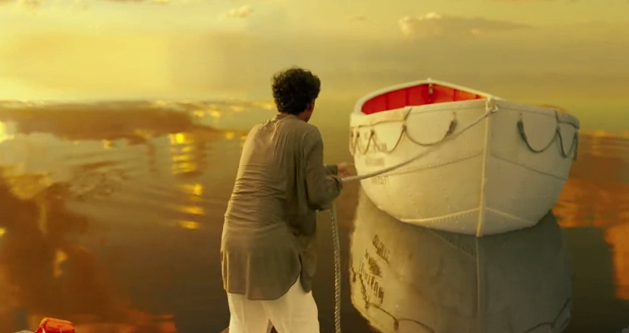
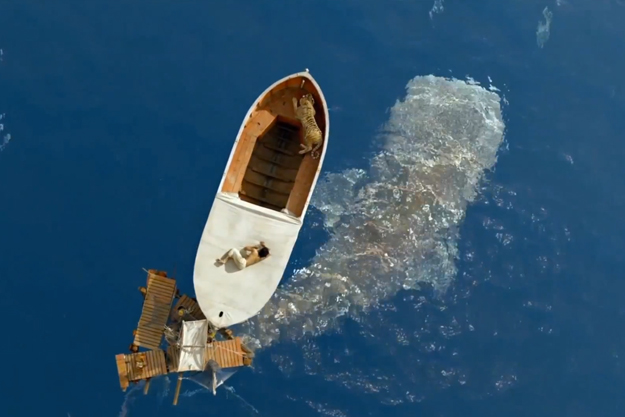
Life of Pi is based upon the Man Booker Prize winning novel of the same name by Yann Martel.  The film and book are about an Indian boy named Pi (played by Suraj Sharma as the young Pi, and Irrfan Khan as the adult Pi), who forms an unusual relationship with a tiger named Richard Parker.  After Pi survives a shipwreck, he is stranded in the ocean on a single lifeboat with Richard Parker, and he must learn how to live with and eventually gain the trust of the unpredictable tiger. 

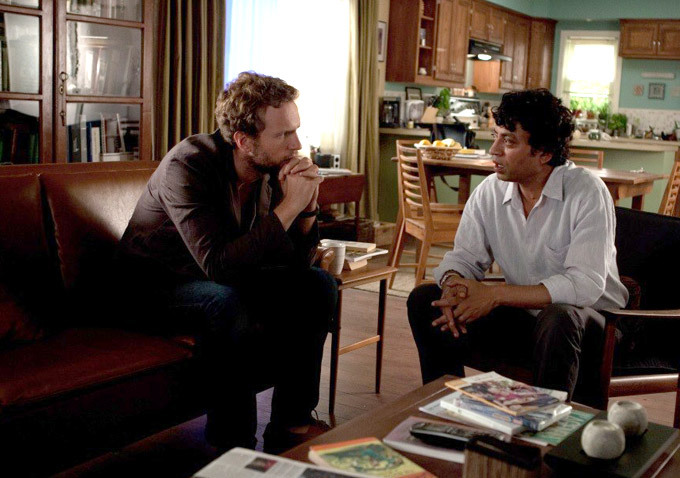
From this simple story, Ang Lee creates a complex, multi-layered meditation on the nature of faith, compassion, and most importantly, the reconciliation of our inner desires with what society expects of us.  Life of Pi is told in flashbacks, as the adult Pi meets with a writer who wants to tell his story. 


AngLeeFilm2


The first part of Life of Pi deals with Pi’s journey to find God, as he moves from one religion to another.  At the same time, Pi’s spiritual journey keeps getting interrupted by his father, whose strict secular worldview conflicts with Pi’s more religious leanings. 

Pi’s father represents the wider society that Pi always finds himself competing with; in a world dominated by science and technology, how can someone as spiritually adventurous as Pi survive?  However, Pi is a headstrong individual, and he’s constantly getting in trouble with both his father and the society at large with his restless yearning to find deeper meaning in the world. 

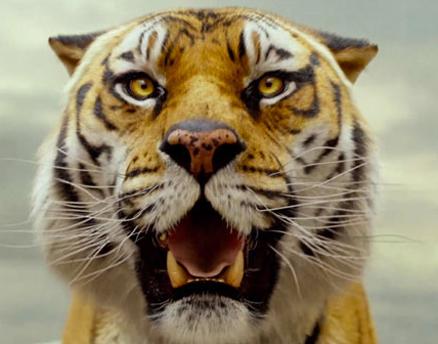
Pi’s journey leads him to being adrift in a single lifeboat, where his worldview and very survival depend on how he deals with a carnivorous, dangerous tiger.  The tiger is symbolic of many things—it represents Pi’s own strong-willed, unyielding nature in the face of a society that won’t accept his beliefs, and it also is a stand-in for Pi’s father who, like the tiger, is both a figure of menace and threat, and also of immense compassion.


AngLeeFilm3


With the many visually astonishing scenes of Pi and the tiger framed against the vastness of the ocean, one gets the sense that there is a higher force at work, watching over Pi and guiding him in his journey of survival.  For the more religiously inclined, this force can be described as being God, but Ang Lee takes this concept further by suggesting that God is more than just a single, all-powerful figure. 

Instead, Ang Lee suggests that God is nature itself, as revealed in an astonishing sequence where Pi and the tiger find themselves on a lush island.  The island is a bountiful source of nutrients and fresh water for Pi and the tiger to live off of, but at the same time Pi discovers that the island also contains a more dangerous side which can lead to death.  Ang Lee is equating nature in the form of the island with God—both forces have the power to give and take away.

In purely cinematic terms, Life of Pi contains some of the most visually ravishing scenes in film history.  The aforementioned scenes on the island re-awaken a sense of wonder and amazement that has been missing in many of the more cynically inclined films of recent years.  Ang Lee uses 3D to astonishing effect in the many awe-inspiring scenes of Pi and the tiger as they encounter the variety of life that exists in the vastness of the ocean. 


AngLeeFilm4


Instead of using 3D to thrill the audience with cheap effects such as creatures popping out of the screen, Ang Lee is more interested in using the medium to engulf the viewer in what can best be called a communal re-connection with nature.  In one particularly effective scene, we see Pi and his lifeboat appearing as little more than a dot against the expansive ocean at night; the ocean waters reflect all the stars above, so it looks like Pi is floating through the vastness of space.

However, unlike some other recent 3D films, Ang Lee doesn’t let the technical spectacle of his film overwhelm the more intimate and philosophical aspects.  Life of Pi isn’t just about visual splendor and 3D effects; instead, it is a deep meditation on life and death, and our ultimate place in the universe.